Overview
Hell Let Loose: Vietnam is a 50v50 tactical multiplayer shooter, so your first goal is not to chase kills. Join a squad, spawn near the active objective, listen to voice comms, and help your team capture or defend sectors. The game rewards positioning, communication, spawn building, and objective play more than individual K/D.
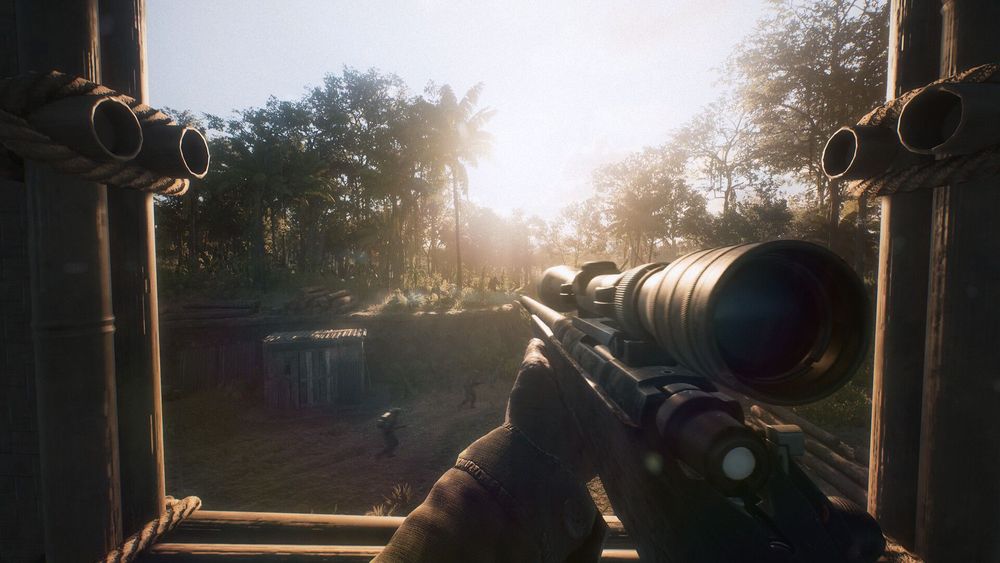
Hell Let Loose: Vietnam is a standalone game, not an expansion. It keeps the Hell Let Loose formula of large maps, commander leadership, squad leaders, proximity chat, squad chat, outposts, garrisons, and hard objective fighting. Vietnam adds helicopters, boats, swimming, NVA tunnel networks, more asymmetric faction tools, and a faster feel compared with the World War II game.
Quick Answer for Your First Match
If you are searching Hell Let Loose Vietnam how to play, start with Warfare or Domination when available because the objective flow is easier to read. Pick a normal infantry role, stay with your squad leader, and check the map before every spawn. Move from cover to cover, avoid running alone through open ground, and assume enemies can be hidden in foliage or around river approaches.
Do not treat the match like a run-and-gun shooter. Teamwork is the core skill: commanders and squad leaders coordinate by radio, while squad and proximity chat keep local players alive. If you do not know where to go, ask your squad leader what objective the unit is attacking or defending.
How Many Players Are in a Match?
The game is built around 50 versus 50 PvP. That means up to 100 players can be fighting across the same battlefield, split between the US Armed Forces and the North Vietnamese side. This scale is why the map can feel quiet for a while and then suddenly become chaotic around a capture point.
Because matches are large, one player rarely wins by acting alone. Your squad contributes by taking ground, defending a sector, keeping spawn points alive, calling out enemies, and supporting vehicles or tunnels. When you die, redeploying to the right spawn can matter more than immediately getting back to the nearest gunfight.
Learn the Objective Before the Gunfight
The first rule is to understand what the current mode wants from your team. In Warfare, both teams fight over a frontline and try to push into enemy territory. In Offensive, one team attacks while the other defends, and lost sectors cannot be recaptured by the defenders.
Conquest spreads the fight across several capture points and uses Morale as a resource. Domination starts with three central points, and controlling two of them can unlock the enemy HQ. If you are new, keep your map open often and look for the active sector, not just the nearest sound of gunfire.
Spawn Points Matter More Than Kills
Outposts, garrisons, tunnels, and supply play are core systems. A squad that keeps useful spawns alive can return to the fight faster, hold angles longer, and pressure the objective from better directions. If your squad leader places an outpost closer to the hard cap, your squad spends less time running and more time influencing the fight.
Garrisons and outposts can also act as warning signals. If a friendly spawn becomes contested or “hot,” enemies are nearby. For new players, checking which spawns are active, hot, or missing is one of the fastest ways to understand where the battle is moving.
Use the Map Like a Tool
The map is not just a navigation screen. It shows sectors, capture points, friendly spawns, squad movement, and commander or squad leader marks. Good squad leaders use it to read where enemy pressure is coming from and where friendly lines are thin.
As a beginner, open the map before spawning and after each death. Ask yourself three questions: which objective is active, where is my squad, and where can I spawn without wasting a long run? This simple habit prevents the most common first-match mistake: spawning far away and arriving after the fight has already moved.
Vietnam-Specific Systems to Notice
Vietnam changes the battlefield with helicopters, boats, swimming, tunnels, and heavier asymmetry between factions. US forces can use helicopters for troop movement, supply drops, and aerial fire support. NVA forces use tunnel networks, boat utility, and anti-air pressure to contest US mobility.
The tunnel system is especially important for map flow. NVA tunnel entrances create fast movement for flanks or reinforcement. The strategic purpose is clear: tunnels counter mobility and help the NVA appear from unexpected directions.
Communication Basics
Hell Let Loose: Vietnam has squad chat and proximity chat. Use squad chat for unit plans and local proximity chat for nearby warnings, revives, and immediate danger. If you hear a tank, helicopter, boat, tunnel, or enemy spawn being called out, open the map and see whether your squad leader has marked it.
Short callouts are better than long explanations. Say what you saw, where it is, and whether it is moving. If you are unsure, mark it as uncertain instead of presenting a guess as fact.
Beginner Checklist
- Join a squad before spawning.
- Spawn on your squad outpost or a useful garrison near the active objective.
- Follow the squad leader instead of crossing the map alone.
- Fight for the objective area, especially the hard cap when capture weight matters.
- Watch rivers, jungle edges, bridges, tunnels, and open airfields for flanks.
- Ask for orders if the map feels unclear.